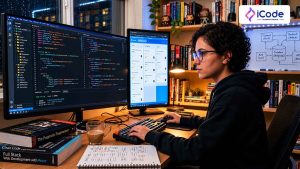
For a long time, success followed a simple formula: earn a degree, get a job and build a stable career. But in 2026, that formula is no longer guaranteed.
Today, many graduates are still searching for opportunities, while others with the right skills are stepping into well-paying roles much faster. This shift has left students and job seekers wondering: What really matters now, a degree or skills?
If you’re confused about where to focus, you’re not alone. Let’s break down the reality of today’s job market and what actually helps you get hired.
The Role of a Degree in Today’s World
A degree still holds value. It shows that you’ve spent time learning, building discipline and gaining foundational knowledge in a specific field.
In certain professions like medicine, law, or core engineering, a degree is essential. It acts as a basic requirement to even enter the field. However, in industries like IT, digital marketing and design, the importance of a degree has changed. With thousands of students graduating every year, having a degree alone doesn’t make you stand out anymore.
It’s no longer a guarantee, it’s just a starting point.
Why Degrees Alone Are Not Enough?
One of the biggest challenges today is that many students finish their degrees without feeling confident about their skills. You may have studied programming, marketing concepts, or design theory, but when asked to actually perform a task, things can feel unclear.
Employers today are not just asking:
What did you study?
They’re asking:
Can you do the job?
This is where many candidates struggle. The gap between what is taught in classrooms and what is required in real jobs has become more visible than ever.
The Rise of Skills in the Hiring Process
In 2026, skills have become the deciding factor in most hiring decisions, especially in the tech industry. Companies are looking for people who can build real applications, solve practical problems, work with modern tools and adapt quickly to new challenges.
For example:
- A candidate who has built websites or worked on live projects is often preferred over someone who has only studied theory.
- A designer with a strong portfolio stands out more than someone with just a certificate.
- A marketer who has handled campaigns gains more attention than someone who only understands concepts.
This clearly shows that skills are not just an advantage, they are essential.
The Education vs Industry Gap
One major reason behind this shift is the gap between traditional education and industry expectations.
Most academic programs focus on theory-based learning, fixed syllabi and limited real-world exposure. But companies expect hands-on experience, problem-solving ability, practical knowledge of tools and technologies. Because of this mismatch, many students graduate without being job-ready. They often need additional training or experience before they can confidently apply for jobs.
This is where skill-based learning plays a crucial role.
What Recruiters Are Really Looking For?
Hiring trends have evolved significantly. Today, recruiters are more focused on what you can do rather than what you have studied.
Some of the key things they look for include:
- Practical, job-ready skills
- A portfolio of real projects
- Confidence in applying knowledge
- Communication and teamwork
- Willingness to learn and grow
In fact, many companies now include practical tests or assignments during interviews to evaluate candidates.
This shift clearly highlights one thing, skills are at the centre of hiring decisions.
So, Does a Degree Still Matter?
Yes, it does! But its role has changed.
A degree can help you build a foundation, add credibility to your profile and get you shortlisted for opportunities, but it cannot replace skills.
Think of it this way:
* A degree helps you enter the race
* Skills help you win it
The Smart Approach: Combine Both
Instead of choosing between a degree and skills, the best approach is to combine them.
When you have theoretical understanding from your degree and practical experience from skill-based learning, you become much more confident and job-ready.
This combination helps you to perform better in interviews, stand out among other candidates and adapt quickly in real work environments
How to Build Job-Ready Skills?
If you want to stay ahead in 2026, focusing on practical learning is essential. Here’s a simple approach:
1. Choose the Right Career Path
Identify an area that interests you, such as Full Stack Development, UI/UX Design, Digital Marketing or Software Testing.
2. Learn by Doing
Focus on hands-on training instead of only theoretical knowledge.
3. Work on Real Projects
Build projects that reflect real-world scenarios. This helps you understand how things actually work.
4. Create a Portfolio
Showcase your work in a way that demonstrates your skills clearly to recruiters.
5. Gain Guidance and Exposure
Learning with the right guidance and mentorship can make the journey much smoother and more structured.
In fact, many learners today prefer enrolling in the best IT training institute that focuses on practical learning, real-time projects and career guidance. This kind of environment helps bridge the gap between education and employment more effectively, making students truly job-ready.
A Common Mistake Students Make
One mistake many students make is waiting until they finish their degree to start learning skills. By the time they realise the importance of practical knowledge, they often feel unprepared and unsure of where to start. A better approach is to begin early, learn alongside your studies. This way, you gradually build confidence and experience, making the transition to a job much easier.
Final Thoughts
In 2026, securing a job goes beyond having a degree. While it provides a foundation, success relies on practical skills, real-world experience and the ability to apply knowledge effectively.
To bridge the gap between theory and practice, consider iCode Technovation Hub in Nagercoil, Tamil Nadu. iCode offers beginner-friendly courses like Full Stack Development, UI/UX Design and Digital Marketing, focusing on hands-on training and real-time projects. With expert guidance and placement support, iCode prepares you to be truly job-ready.
Invest in your future at iCode Technovation Hub, where skills meet opportunities!