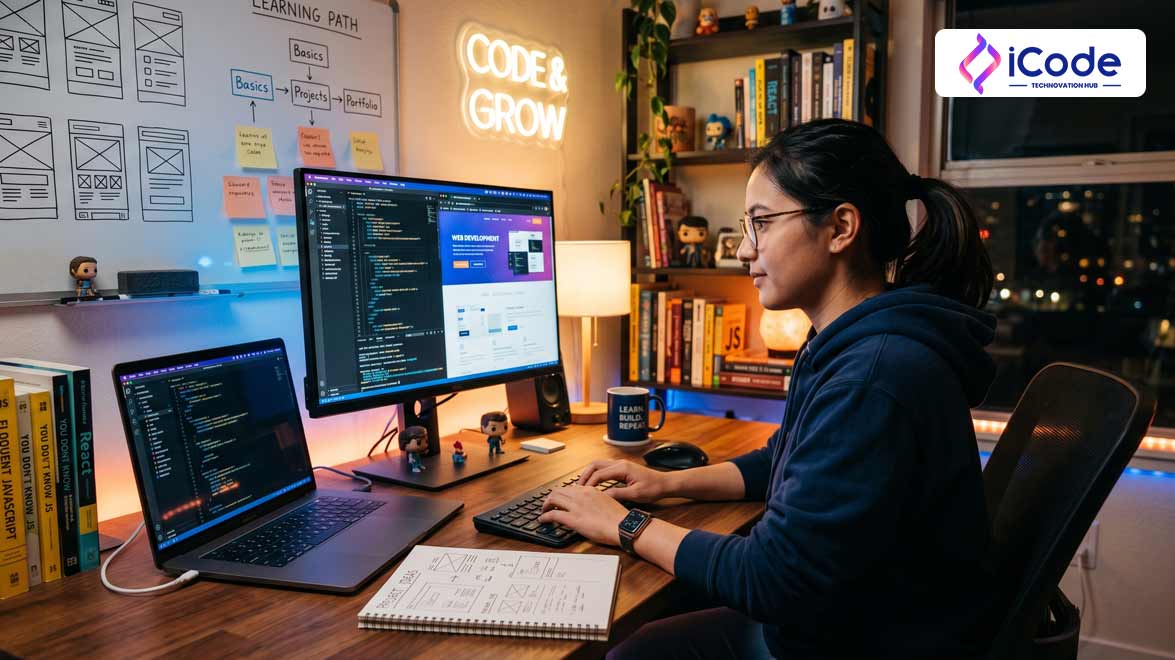
Starting a career in web development without experience may feel difficult at first. Many students and fresh graduates believe they need years of coding knowledge or a computer science degree to enter the IT industry. But the truth is, web development is one of the best career paths for beginners because skills matter more than background.
Today, many successful web developers started with zero experience. They learned step by step, built projects, practiced consistently, and got hired based on their abilities. If you are interested in technology, websites, coding, or creative problem-solving, web development can be a great career choice.
In this blog, we’ll explain how to start a career in web development even if you have no prior experience.
What is Web Development?
Web development is the process of creating websites and web applications. It includes designing, building and maintaining websites that people use every day.
Examples of websites and apps built by web developers include:
- Online shopping websites
- Business websites
- Educational portals
- Booking systems
- Social media platforms
- Portfolio websites
Every company today needs an online presence, which is why web developers are in high demand.
Can You Become a Web Developer Without Experience?
Yes, absolutely.
Many companies hire freshers if they have the right skills and practical knowledge. Employers often care more about what you can build than whether you have previous job experience.
Even if you are a college student, a recent graduate, a non-IT student, someone switching careers or a job seeker with no technical background,
You can still start learning web development and build a successful career.
Step 1: Learn the Basics of Web Development
The first step is understanding the core technologies used to build websites.
Front-End Development Skills
Front-end development focuses on what users see on the screen.
Learn:
- HTML – Structure of a website
- CSS – Styling and layout
- JavaScript – Interactivity and dynamic features
These three skills are the foundation of web development.
Back-End Development Skills
Back-end development handles server-side logic and databases.
Popular back-end technologies:
- PHP
- Python
- Node.js
- Java
- MySQL / MongoDB
You can begin with the front-end first, then move into the back-end later.
Step 2: Choose a Career Path
Web development has multiple paths. Choose one based on your interests.
Front-End Developer
Works on design, layout, animations, buttons, responsiveness, and user experience.
Back-End Developer
Handles databases, login systems, APIs, server logic, and security.
Full Stack Developer
Works on both front-end and back-end.
For beginners, Full Stack Development is often the best option because it gives wider job opportunities.
Step 3: Practice by Building Real Projects
Learning theory alone is not enough. To get hired, you need practical skills.
Start building beginner-friendly projects like:
- Personal portfolio website
- Restaurant website
- Login page
- To-do list app
- E-commerce homepage
- Student management system
Projects help you improve coding confidence, solve real problems, understand workflow and build a portfolio for interviews.
Employers love candidates who can show real work.
Step 4: Create a Strong Portfolio
A portfolio is a website or collection of your projects that shows your skills.
Your portfolio should include information about you, skills you know, projects with screenshots, a GitHub profile, a resume, and contact details
When you don’t have experience, your portfolio becomes your proof of ability.
Step 5: Learn Git and GitHub
GitHub is an important platform for developers. It helps store code online and shows employers your work.
Benefits of GitHub:
- Share projects publicly
- Track progress
- Collaborate with others
- Build credibility
Even freshers can impress recruiters with an active GitHub profile.
Step 6: Join a Professional Training Institute
Self-learning is possible, but many students learn faster with expert guidance. A good web development training institute can help you with a structured learning path, live projects, industry tools, mentorship, doubt clearing, resume support, interview preparation, and placement assistance. This approach saves time and avoids confusion.
Step 7: Prepare for Interviews
Once you gain basic skills and projects, start applying for internships and fresher jobs.
Common interview topics:
- HTML tags and forms
- CSS Flexbox / Grid
- JavaScript basics
- Responsive design
- API basics
- Project explanation
- Problem-solving ability
Be honest about being a fresher, but confident in your skills.
Step 8: Apply for Internships First
If full-time jobs feel difficult initially, consider applying for internships. Nowadays, many are seeking the best internship provider in Nagercoil and enrolling to avoid missing out on valuable opportunities. Internships provide you with real company experience, help you develop team collaboration skills, and instill work discipline. They offer exposure to actual projects and enhance the value of your resume. Additionally, many internships can later turn into full-time job opportunities, making them an essential step in your career journey.
Common Mistakes Beginners Should Avoid
1.Waiting Too Long to Start
Many students wait for the “perfect time.” Start now.
2.Only Watching Tutorials
Watching videos is not enough. Build projects.
3.Fear of Coding Errors
Errors are normal. Every developer learns by fixing mistakes.
3.Ignoring Communication Skills
Good communication helps in interviews and teamwork.
4.Giving Up Early
Success takes consistency.
5.How Long Does It Take to Become Job Ready?
With proper training and daily practice:
- 3 Months – Basics + mini projects
- 6 Months – Strong skills + portfolio
- 6–9 Months – Job-ready for fresher roles
Your speed depends on dedication and consistency.
Why Web Development is a Smart Career Choice
Web development remains one of the top career options due to the high demand in every industry, the abundance of remote job opportunities, and the potential for freelancing income. It offers fast career growth and good starting salaries, combining both creative and technical work. Additionally, there is no strict degree barrier, and in this field, skills matter more than marks.
Final Thoughts
Starting a career in web development without experience is completely possible, thousands of students begin with zero knowledge and become successful developers through learning, practice, and persistence. You don’t need to know everything on day one; simply start with the basics, build projects, create a portfolio, and keep improving every week. If you are serious about building a future in IT, web development can be the perfect starting point, and the best time to start is now. At iCode Technovation Hub, we help students and freshers learn web development through practical training, live projects, mentorship, and placement support. Join today and take your first step toward a successful IT career.