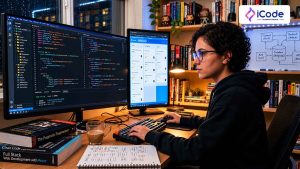
Walk through the computer science block of almost any college when placements are around the corner.
You don’t have to listen for long. Someone’s asking whether Java is still worth learning. Another group is arguing about Python.
A few seats away, somebody says companies only want people who know AI now. Nobody agrees on anything. Everyone leaves the conversation feeling they should probably learn one more thing.
That’s become part of college life.
The List Never Seems to End
Most students don’t stop learning because they’re lazy. They stop applying. There’s always another course waiting. Another framework that everyone suddenly recommends. Another YouTube video with a title that makes yesterday’s learning feel old.
A lot of laptops end up looking the same. Folders full of downloaded notes. Bookmarks you’ll “read later.” Projects that reached 80% and never quite crossed the finish line.
It isn’t because people don’t enjoy coding. It’s because they keep wondering whether they’re ready yet.
Placement Season Has Its Own Rumours
Every campus has them.
“This company only hires people who know React.”
“You need three internships.”
“They won’t even look at your résumé unless you’ve built an AI project.”
Nobody really knows where those stories begin. By the following week, they’re repeated often enough that they start sounding like facts. Students still spend hours worrying about them.
Open Almost Any GitHub Profile
Scroll through a few student profiles and you’ll notice something. One finished project. Three unfinished ones. A repository that hasn’t been updated for months.
Another with a name like final-project-new-final-v2. That’s not unusual.
Ask developers who’ve been working for years and plenty of them will admit they have abandoned projects too. Writing code has never been a straight line from start to finish.
The Internet Is Always One Step Ahead
Spend fifteen minutes online and you’ll come away with five different opinions. One person says web development is the future. Another says cybersecurity. Someone else says AI has changed everything.
Tomorrow there’ll be another video saying something completely different. Technology keeps moving. The internet just makes it feel faster than it really is.
One Thing Doesn’t Change
Ask someone who’s already working as a developer what helped them most during their first interview. Very few start listing programming languages.
They remember the project they struggled with. The bug that took two days to fix. The application that finally worked after dozens of failed attempts. Those experiences stay with people because they can’t be copied from a tutorial.
That’s one reason students often move beyond random online lessons and join a MERN stack training institute. Building complete applications teaches a different kind of confidence. You stop worrying about how many technologies you’ve watched videos about and start understanding how they fit together.
Interviews Don’t Usually Go The Way Students Imagine
Ask a few graduates about their first technical interview and you’ll hear some interesting stories.
Someone spent two weeks revising data structures and ended up talking about a college project instead.
Someone else expected difficult coding questions but was asked why they chose a particular approach while building a simple website.
Another student couldn’t answer every technical question but explained their own project so clearly that the conversation kept going.
Interviews have a habit of surprising people.
That’s why preparing only for the “perfect” interview doesn’t always help.
AI Has Changed the Conversation
A couple of years ago, students were asking which programming language they should learn first. Now the discussion often starts with AI.
Can it write code?
Will it replace developers?
Should students even spend time learning programming anymore?
The questions have changed. The need to understand code hasn’t.
AI can help write snippets, explain concepts and speed up development, but somebody still has to understand what’s happening, recognise when something is wrong and decide what should be built in the first place.
Those parts are much harder to automate.
Parents Usually Ask a Different Question
Students often ask,
“Am I learning enough?”
Parents usually ask something else.
“Will this help my son or daughter get a job?”
It’s a reasonable question.
The answer isn’t tied to one programming language.
Technology will keep changing, just as it always has.
Students who keep building, keep improving and stay curious tend to adapt much more easily when those changes arrive.
Maybe It Was Never About Learning Everything
The students who eventually get hired aren’t the ones who reached the end of the internet. Nobody ever does. They’re the ones who stopped waiting for the feeling of being “completely ready.”
At some point they applied for internships.
Built another project.
Attended interviews.
Made mistakes.
Learnt from them.
Then did it all again.
If you are struggling with how to begin, do not waste your time trying to guess which technology will be in demand in the next three years.
Select something and master it. Use it to create something. Destroy it. Repair it. Then create something else.
It could be a web app development course, or classroom training or your own projects whereby developing things is a far more effective approach than simply collecting tutorials.
FAQs
1. Do I need to know every programming language before applying for jobs?
No. Most entry-level roles don’t expect fresh graduates to know everything. A solid understanding of programming fundamentals and a few well-built projects usually matter more than trying to learn every new technology.
2. Are personal projects really important during placements?
Yes. Projects give interviewers something practical to discuss. They also show how you approach problems, organise your work and apply what you’ve learned.
3. Is AI reducing the need to learn coding?
AI is changing the way developers work, but it hasn’t removed the need to understand programming. Students who know how software works are generally in a much better position to use AI effectively.
4. Should I keep taking online courses before applying for jobs?
Learning is always valuable, but there comes a point where building projects and attending interviews teaches more than starting another course. Many students discover their biggest lessons after they begin applying rather than before.