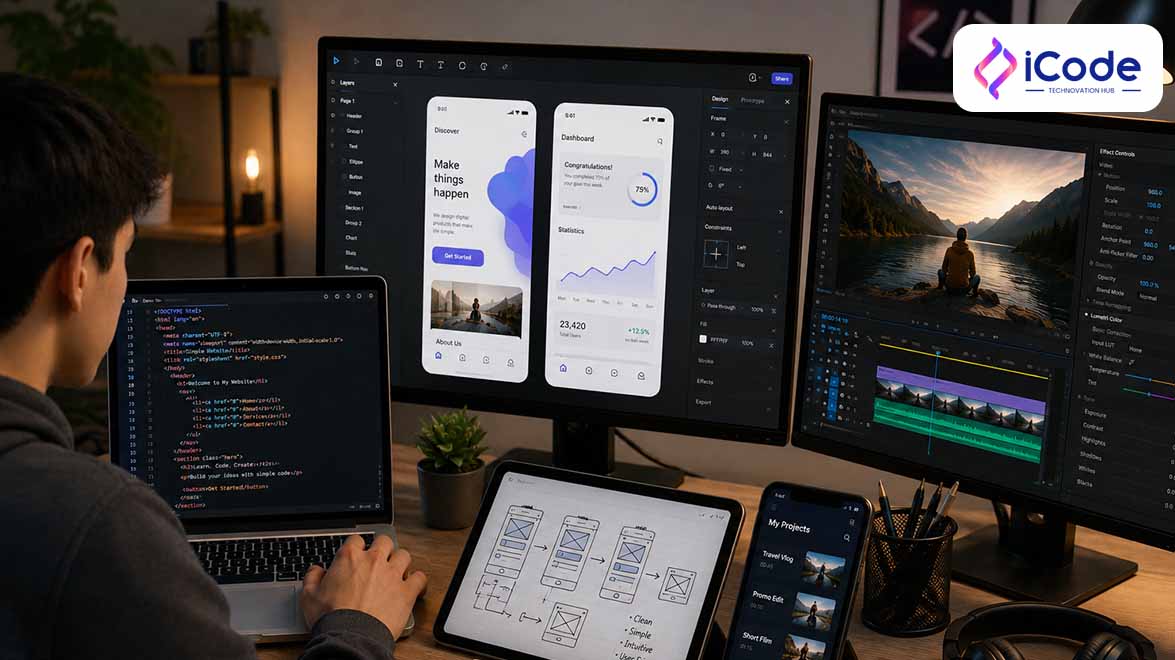
A few years ago, technology skills felt optional for most students. Knowing how to use a computer was enough. Maybe basic typing too. But things changed quickly.
Now almost everything around students involves technology in some way, school projects, communication, creative work, research, even future careers that didn’t exist a decade ago.
Technology changes so quickly now that waiting until later to learn these skills can actually make things harder. A lot of students don’t really notice that yet because technology already feels like a normal part of everyday life.
Technology Is Already Everywhere Around Students
Students today are constantly around technology, whether it’s at school, at home, or just hanging out with friends online. It’s become such a normal part of life that most people barely think about it anymore.
The interesting part is that using technology and understanding technology are two completely different things.
Scrolling through apps is easy. But knowing how technology works such as front end development, how to create with it, or how to solve problems using it, that’s where valuable skills start developing.
Schools Alone Can’t Keep Up with Technology
Technology moves so quickly that schools sometimes struggle to keep up. By the time certain lessons or textbooks get updated, students are already seeing new apps, tools, and trends everywhere else online.
That’s usually why students who explore things outside the classroom end up learning a lot faster.
Some try coding just out of curiosity. Others get into graphic design, robotics, design, or AI tools because they look interesting. And even if those skills seem small at first, they slowly build confidence over time without students even noticing it.
Technology Skills Aren’t Only for “Tech Jobs”
This is something many students misunderstand. You don’t need to become a programmer or software engineer for technology skills to matter.
Almost every career now involves technology somehow:
- business
- healthcare
- design
- sports
- engineering
- media
- marketing
- education
Even jobs that seem unrelated to computers still use digital tools every day. That’s why basic tech confidence is becoming useful in almost every field.
Learning Technology Builds Problem-Solving Skills Too
One of the biggest benefits isn’t even the technology itself. It’s the way students learn to think. When students work on coding projects, design challenges, or digital tools, they usually learn:
- how to solve problems
- how to test ideas
- how to stay patient when something doesn’t work
- how to think creatively
Those skills help far beyond computers.
Students Learn Faster When They Build Things
Reading about technology is one thing. Actually creating something feels completely different.
That’s why students often enjoy:
- building games
- creating apps
- designing websites
- editing videos
- experimenting with robotics
Actually building something feels very different from just reading about it or memorising notes for a test. When students experiment, mess things up, and figure out how to fix them, the learning tends to stick much better.
Honestly, most people learn technology by trial and error anyway not by getting everything perfect the first time.
AI Doesn’t Feel “Future” Anymore
A few years back, AI sounded like one of those things people only talked about in movies or tech conferences.
Now it’s everywhere.
Students use it while searching online, studying, editing photos, brainstorming ideas, or even just messing around with apps. Most people probably don’t even realise how often they interact with AI during a normal day.
Nobody’s saying students need to suddenly become experts in it. But getting familiar with how these tools work now will probably make things less confusing later.
Because honestly, technology isn’t slowing down anytime soon.
Confidence Matters More Than Being “Naturally Good”
A lot of students assume technology skills are only for people who are already smart with computers. That’s usually not true. Most people learn by experimenting, getting stuck, searching for answers, and trying again.
The students who improve fastest are often just the ones willing to stay curious longer.
Technology Can Turn Passive Screen Time into Active Learning
This is a huge difference. Spending hours online doesn’t automatically build useful skills. But learning how to create something with technology changes the experience completely.
Instead of only consuming content, students start:
- building
- designing
- editing
- solving
- experimenting
That shift matters more than people realise.
The Earlier Students Start, the More Comfortable It Feels
Learning technology skills early doesn’t mean students need to master everything immediately. It simply gives them more time to explore without pressure. Students who start earlier often become:
- more confident trying new tools
- less afraid of mistakes
- quicker at adapting to change
Because technology keeps evolving, adaptability is becoming one of the most valuable skills itself.
Nobody Can Predict Every Future Career
Some future jobs probably don’t even exist yet. That’s why learning only fixed information isn’t enough anymore. Students who understand technology, creativity, and problem-solving usually have an easier time adjusting when industries change.
The goal isn’t to predict the future perfectly. It’s to become comfortable learning new things continuously.
Technology Skills Don’t Have to Start Big
A lot of students think they need expensive equipment or advanced knowledge before starting.
Honestly, most people begin small:
- simple coding lessons
- editing short videos
- creating small games
- learning digital design basics such as UI/UX
- experimenting with beginner projects
Those smaller steps often build confidence faster than trying to learn everything at once.
The Students Who Stay Curious Usually Learn the Most
Technology changes constantly. The students who benefit most aren’t always the ones who memorise the most information. Usually, they’re the ones who keep exploring, asking questions, and trying things even when they don’t fully understand everything yet.
That curiosity becomes valuable over time.
Why Waiting Too Long Can Make Technology Feel Harder
A lot of students think technology learning can wait until later. But by the time some skills become “necessary,” the students who started earlier already feel much more comfortable using them.
Places like iCode Learning focus on helping students explore coding, creativity, problem-solving, and technology in a more hands-on way. Sometimes learning becomes much easier when it feels like building something instead of simply studying it.